

Properties and Uses of DMSO

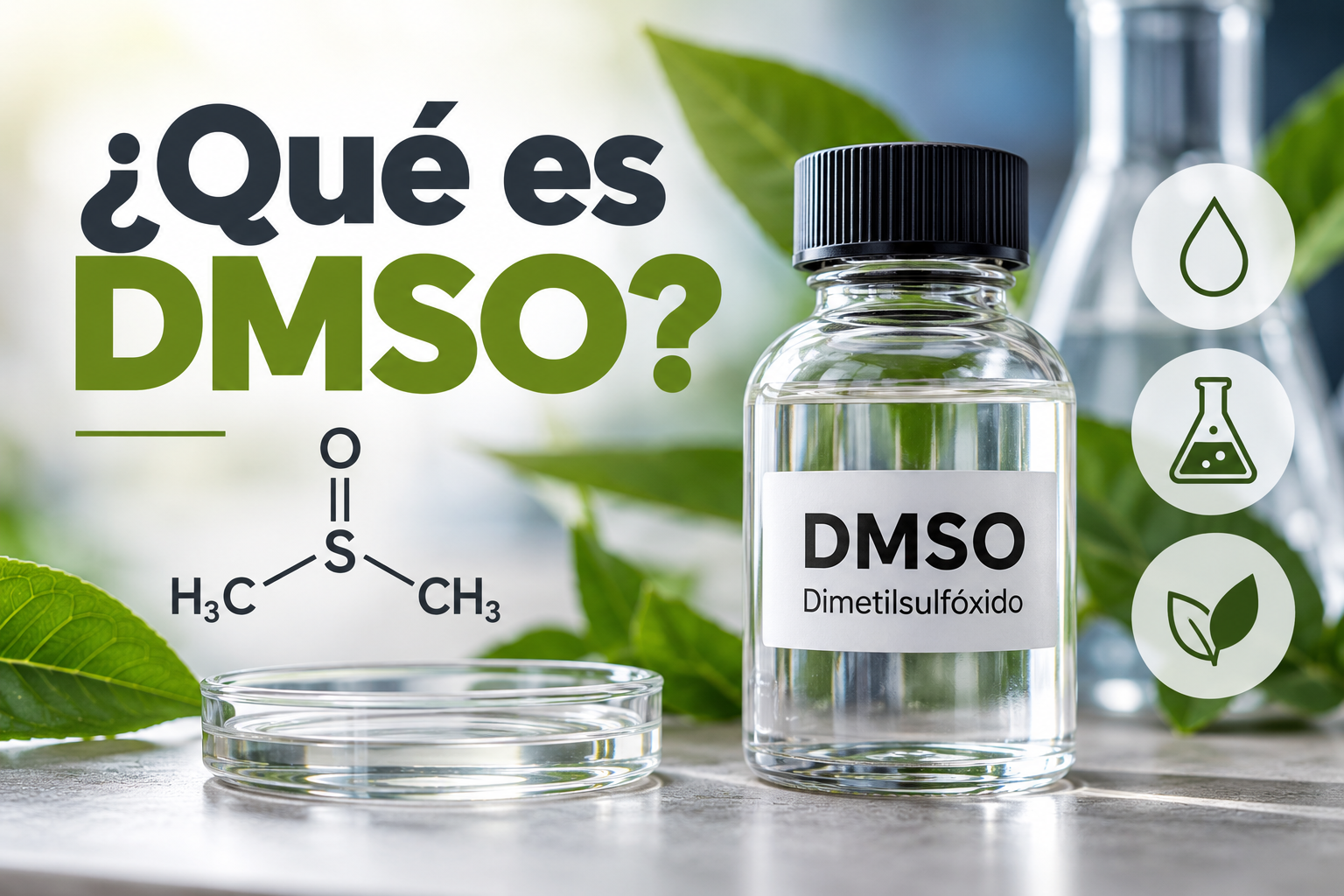
What is DMSO?
The properties and uses of DMSO are related to its ability to act as a solvent and its industrial and scientific applications.
DMSO (dimethyl sulfoxide) is an organic chemical compound that appears as a clear, colorless liquid. The properties and uses of DMSO are mainly related to its ability to act as a solvent and its applications in chemical, industrial, and laboratory processes.
Its chemical formula is C₂H₆OS. One of its best-known characteristics is its ability to mix with water and dissolve numerous substances. It can also penetrate the skin and facilitate the absorption of other compounds, so careful handling is required.
What are the characteristics of DMSO?
Dimethyl sulfoxide has several physical and chemical properties that explain its use in different sectors.
Its main characteristics include:
- Appearance: clear, colorless liquid.
- Chemical formula: C₂H₆OS.
- Solvent properties: it can dissolve numerous organic and inorganic substances.
- Solubility: it is miscible with water.
- Freezing point: approximately 18.5°C, which means it can solidify at relatively low temperatures.
- Hygroscopicity: it can absorb moisture from the environment.
- Skin penetration: it can penetrate the skin and facilitate the transport of certain substances.
These characteristics make DMSO useful in specific technical applications, provided that appropriate safety measures are followed.
Properties and Uses of DMSO: Main Applications
The uses of DMSO are related to its solvent properties and its ability to interact with different substances.
1. Chemical Industry
DMSO is used as a solvent in certain chemical synthesis and industrial manufacturing processes.
2. Research and Laboratory
In laboratories, it is used to prepare solutions and dissolve compounds used in different experimental procedures.
3. Cryopreservation
Under controlled conditions, DMSO is used as a component of certain cryoprotective solutions designed to preserve cells and other biological materials at low temperatures.
4. Pharmaceutical Research
Dimethyl sulfoxide is studied and used in certain pharmaceutical contexts because of its solvent properties and its ability to penetrate tissues.
Its use in medicinal products is subject to specific quality, safety, and authorization requirements.
Precautions When Handling DMSO
Although DMSO has numerous technical applications, it is important to handle it correctly.
It is recommended to:
- Consult the product label and safety data sheet.
- Avoid unnecessary contact with the skin and eyes.
- Use appropriate protective equipment for the activity being carried out.
- Do not mix it with other substances without first checking their compatibility.
- Keep the container properly closed.
- Store it according to the manufacturer’s instructions.
- Keep out of reach of children.
Important: DMSO can facilitate the absorption of other substances through the skin. It should not be used for therapeutic purposes without appropriate authorization and medical supervision.
DMSO Storage
DMSO should be stored in a compatible, tightly closed container and protected from conditions that could affect its stability.
Due to its freezing point, it may solidify when the ambient temperature drops below approximately 18.5°C. This is a physical characteristic of the compound and does not necessarily mean that it has deteriorated.
For specific storage conditions, consult the manufacturer’s instructions.
More Information About the Properties and Uses of DMSO
The properties and uses of DMSO explain its presence in various industrial, scientific, and research activities.
For more technical information about dimethyl sulfoxide, you can consult the scientific database PubChem, which provides information about its chemical and physical characteristics.
If you would like to learn more about this compound, discover our DMSO available at CDSLAb, where you will find information about its characteristics and presentation.
Before using any product containing DMSO, it is important to check its composition, purity grade, intended purpose, and safety documentation.